Suggestions and guides
Laquer

Lacquer in all of its possibilities
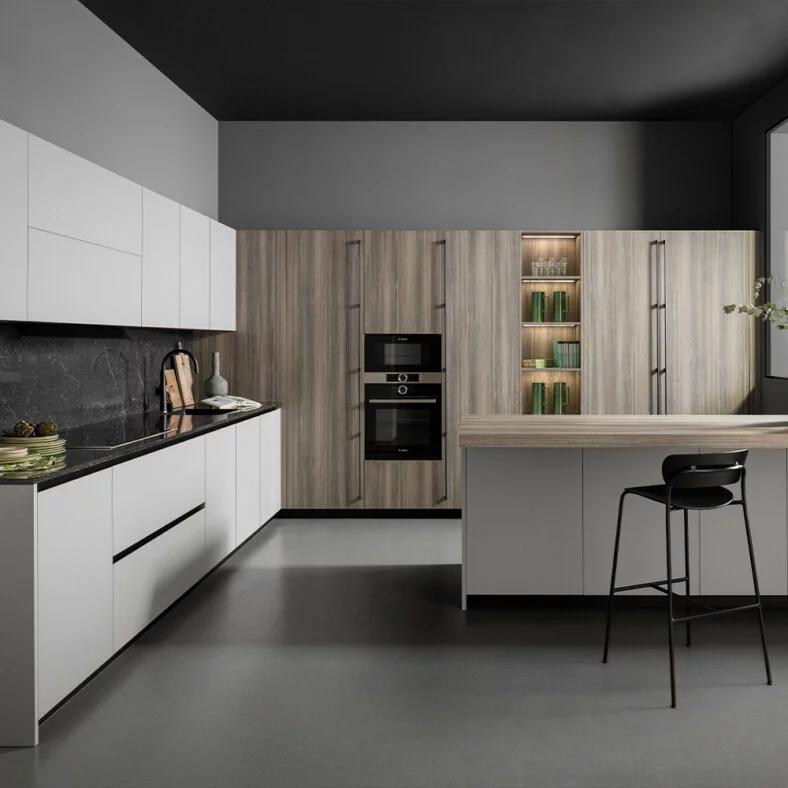
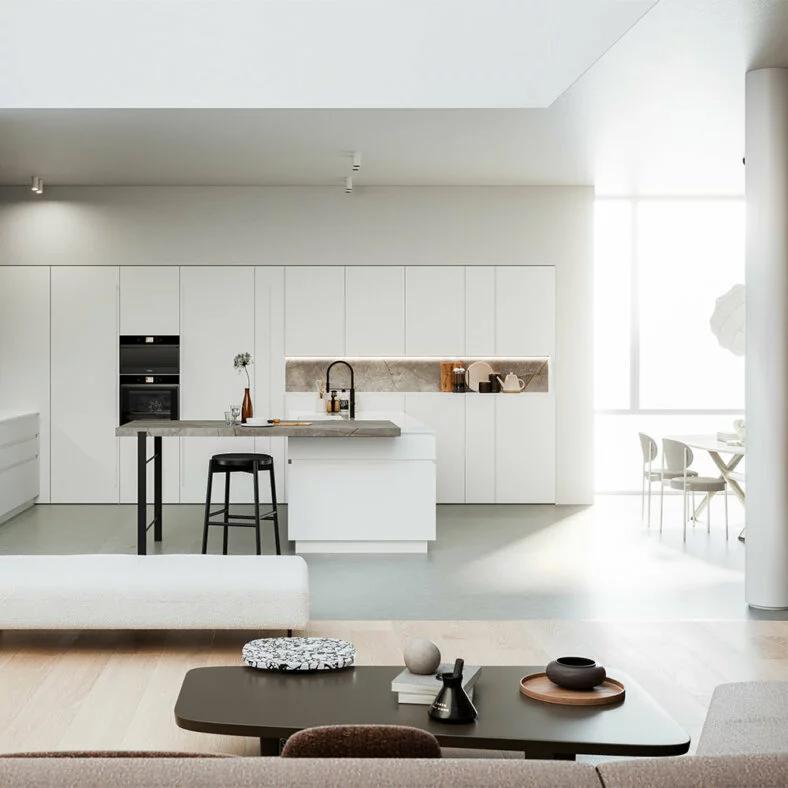
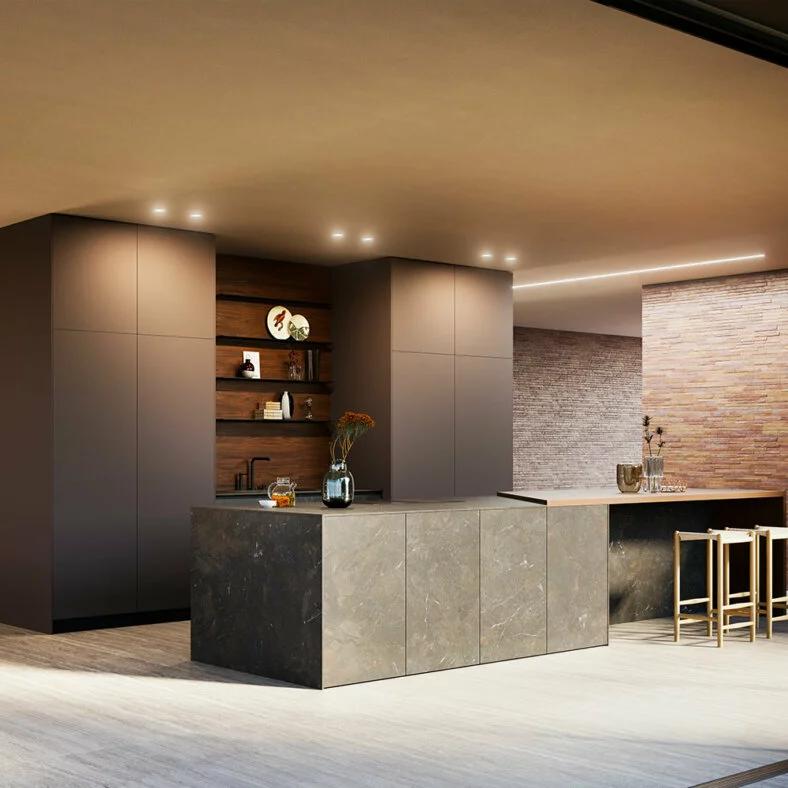
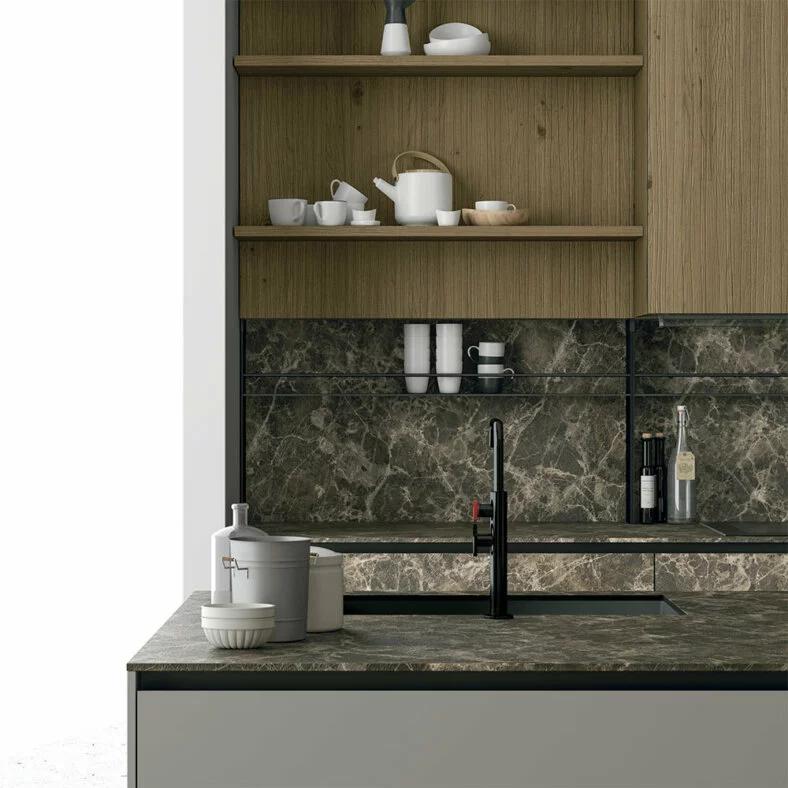
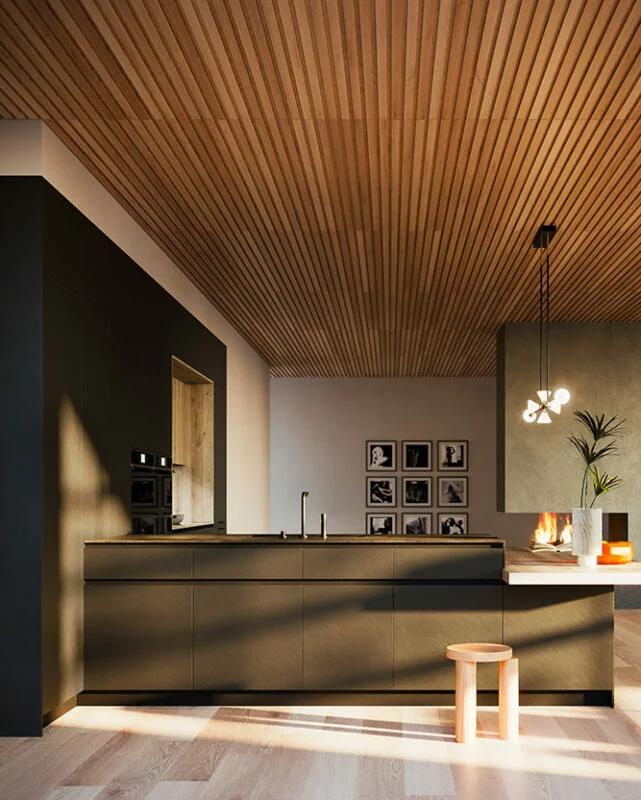
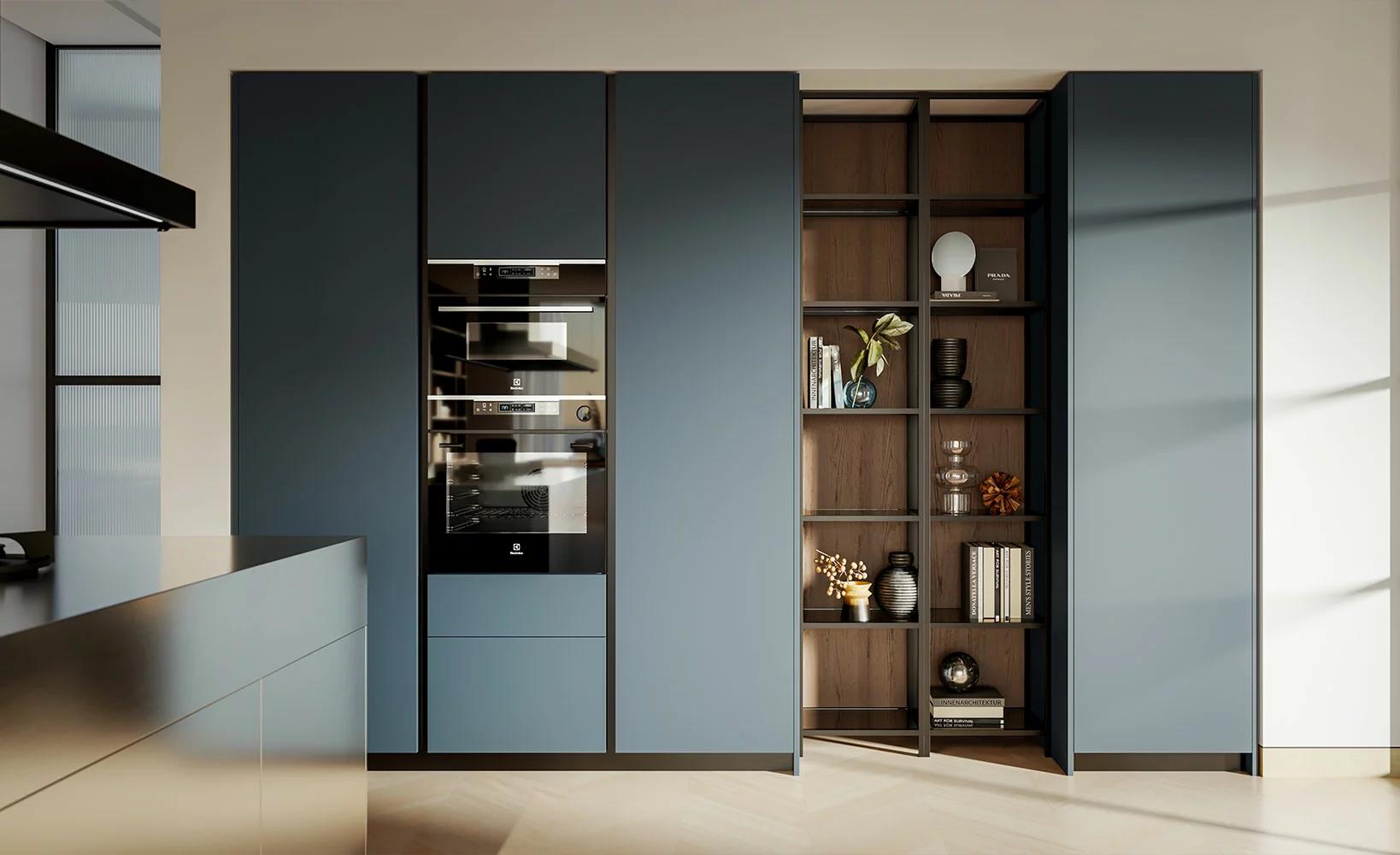
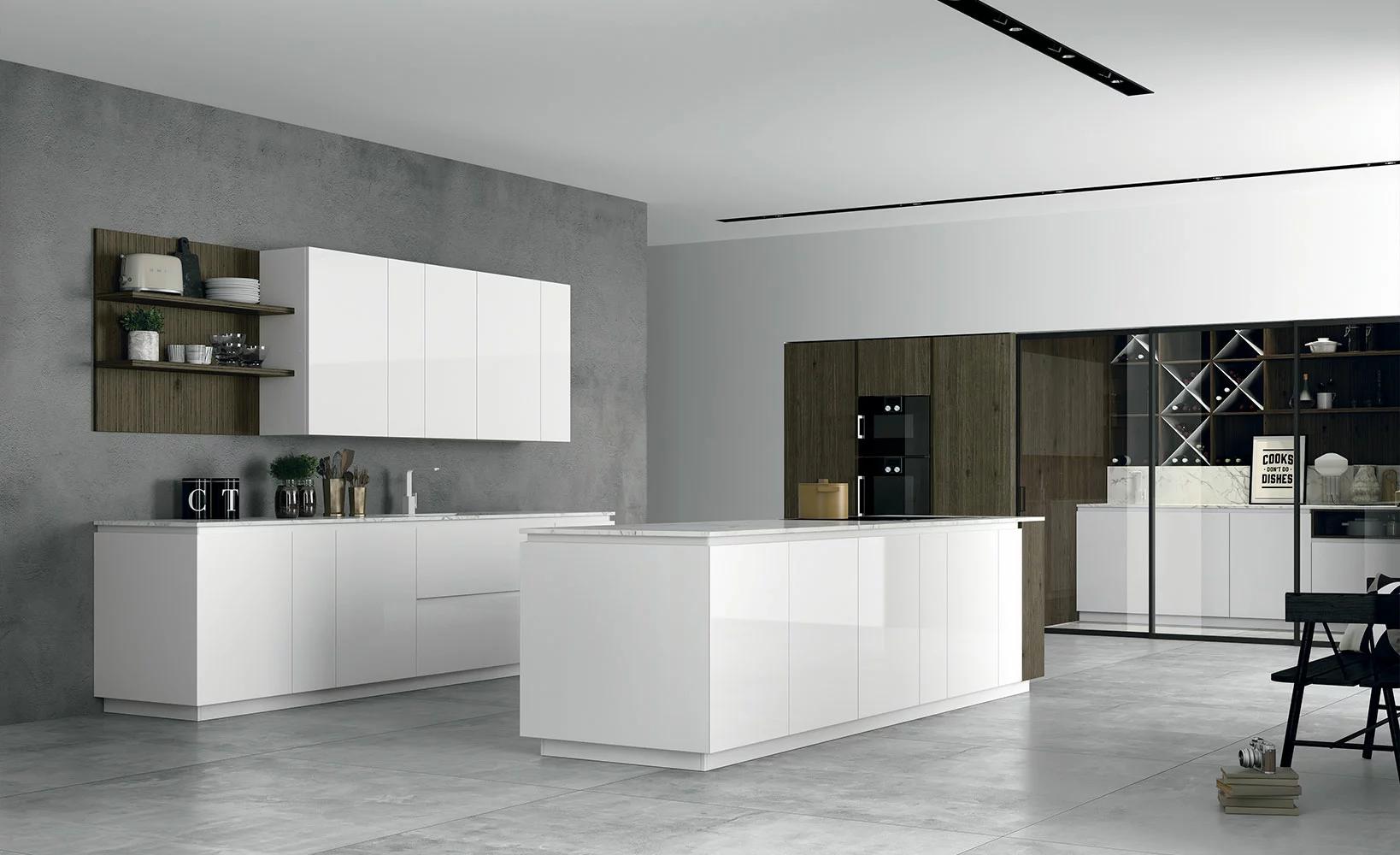
Glossy lacquer kitchens bring brightness to the space, matte lacquer kitchens stand out for their elegance, even more so in evosilk, and pair beautifully with wood elements; satin lacquer offers an unexpected, refined metallic touch, while the smooth or relevé excimer‑cured lacquer is the latest innovation.
What is lacquer?
Lacquer is medium density fibreboard panel entirely finished with a polyester paint and a polyurethane top coat that create a total and homogenous surface.
Types of lacquer
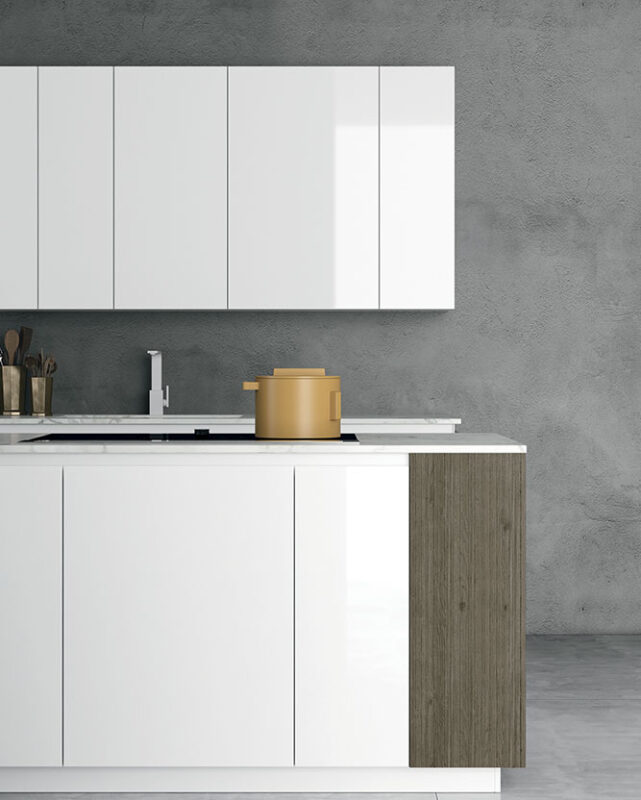
Glossy lacquer
Polished to reflect light like a mirror and brighten any space.
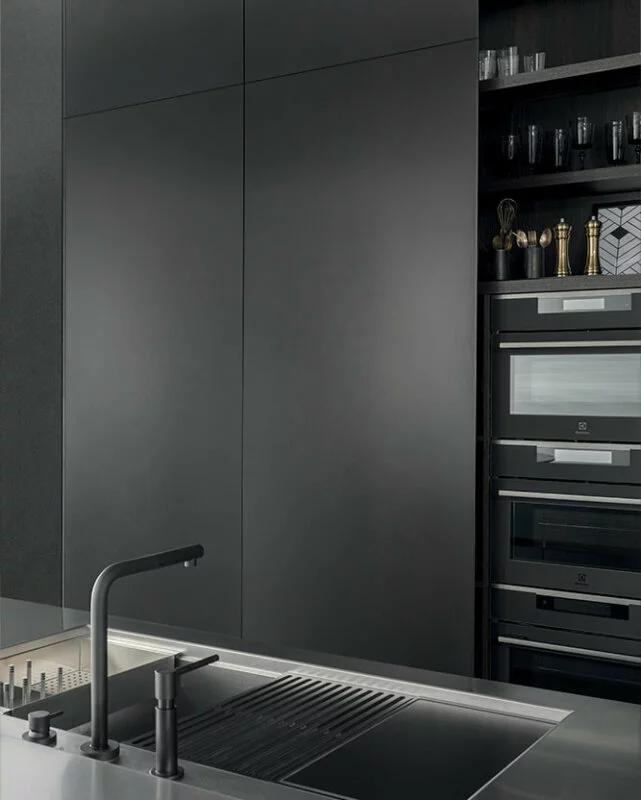
Matt lacquer
The elegance of this non-glossy colour finish is timeless and often used to introduce movement by introducing colour in wood kitchens.
Metallized lacquer
The door panel is sprayed with a metallic paint that creates a resistant finish. Doimo Cucine, for example, offers four options in pink gold, gold, zinc and nickel.
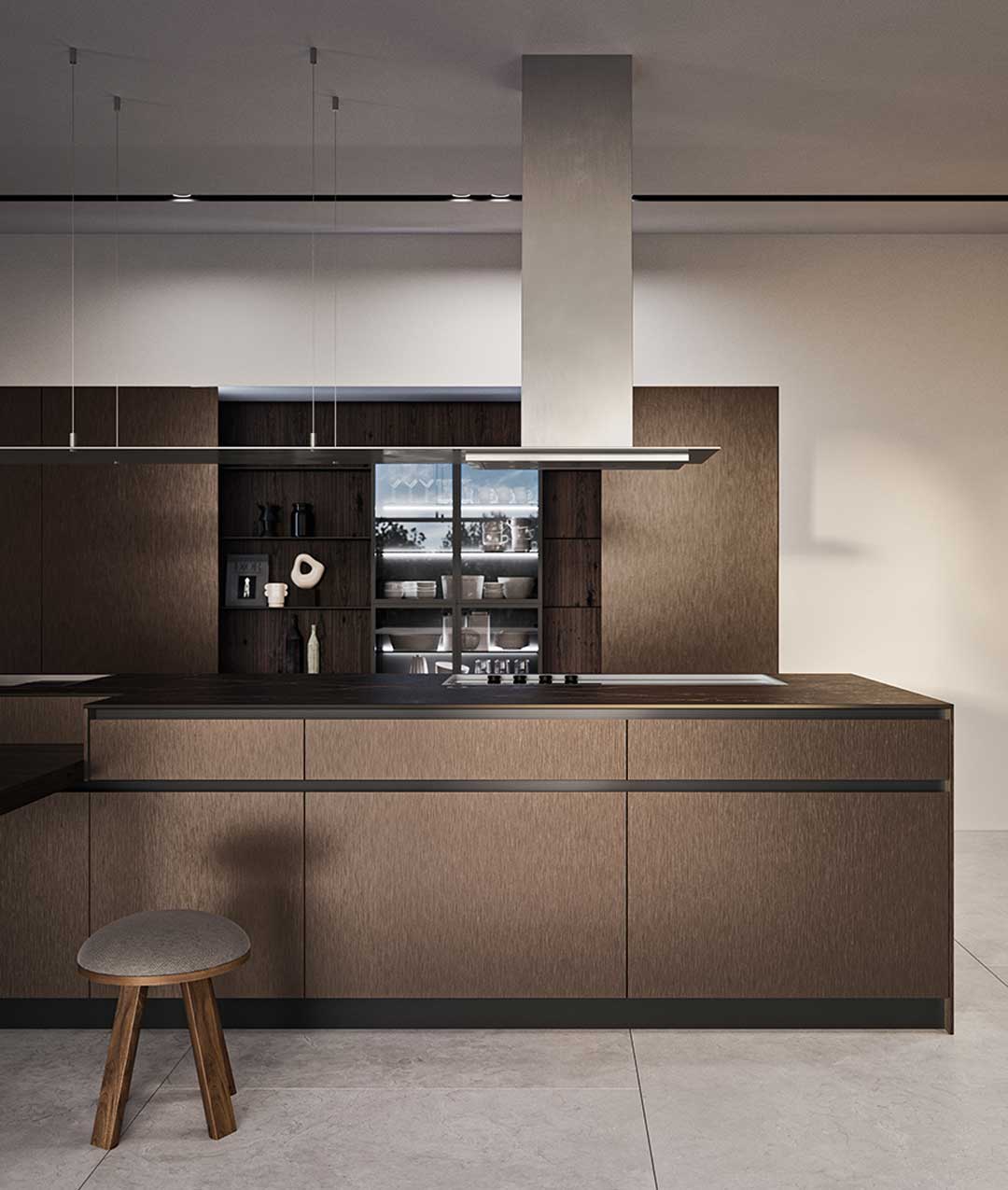
Satin lacquer
Polyester support painted with a polyurethane based coat finish on edges and surfaces. Front face finished in acrylic paint containing metallic components, brushed to obtain a satin finish, with a matt lacquer finish on the interior face.
EvoSilk lacquer
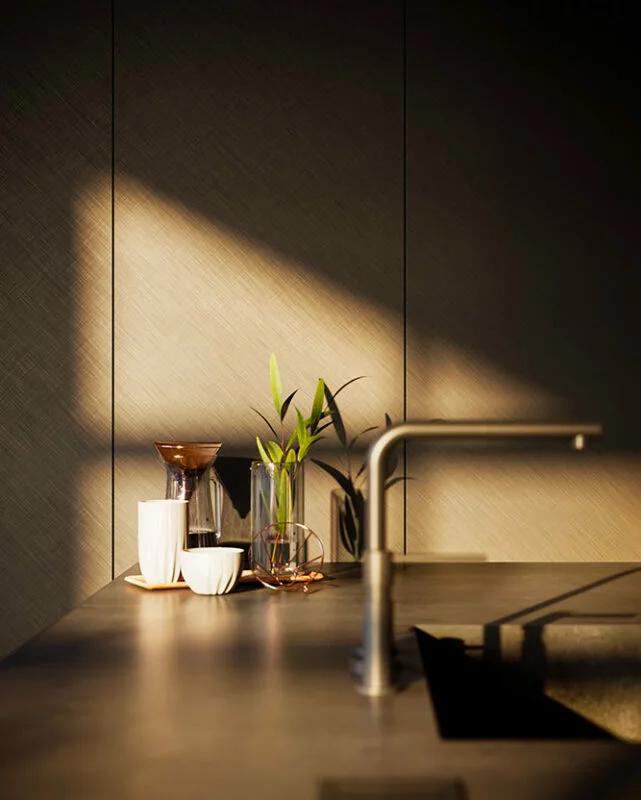
This exceptionally matt lacquer is created using excimer technology and drying under UV lamps. The result is a highly compact surface: more resistant than other lacquers and capable of absorbing light, a quality that emphasises its matt finish and gives it a soft-touch.
Smooth excimer‑cured lacquer
Thanks to excimer technology and UV‑lamp curing, this lacquer is exceptionally matte, velvety to the touch, and highly durable. The doors in smooth excimer‑cured lacquer differ from EvoSilk in finish level: even the edges are lacquered, while the back is in matching matte lacquer.
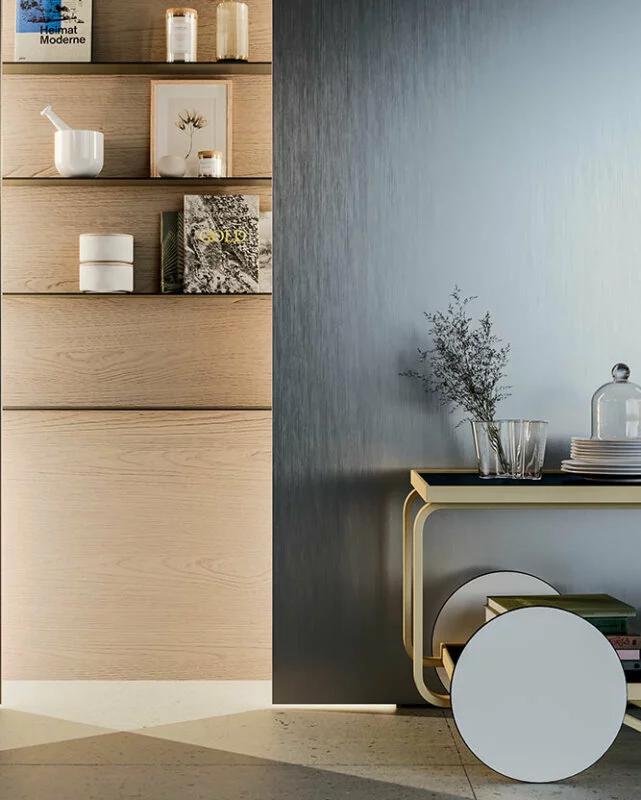
Relevé excimer‑cured lacquer
They feature the same excimer‑cured lacquer finish as the smooth version, but are first machined with vertical grooves at varying intervals, creating a dynamic low‑relief striped pattern with pleasing chiaroscuro effects.
Characteristics of lacquered panels
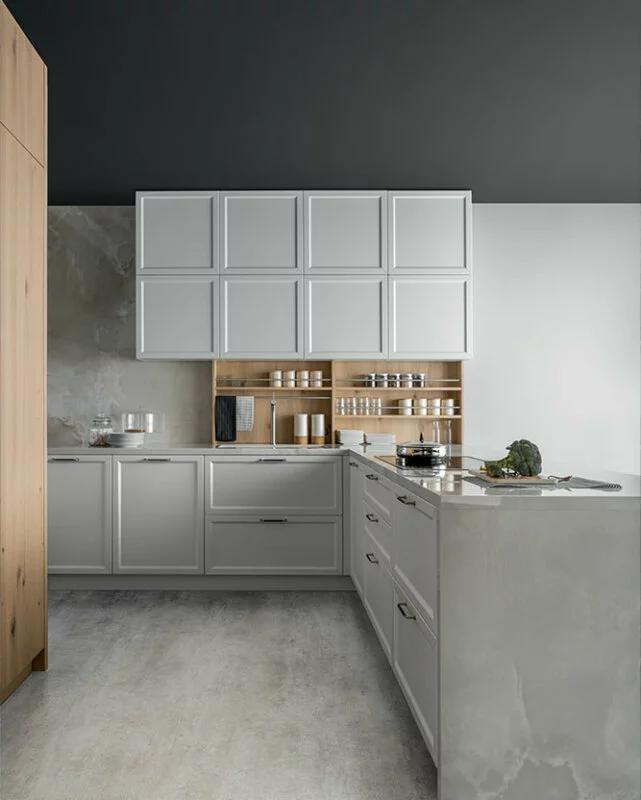
Lacquer is used in the kitchen industry primarily for fronts, shelves and panels.
Lacquer finishes are:
- stain resistant when cleaned immediately
- available in numerous colours
- subject to colour variations when over exposed to direct natural sunlight, an issue that is extremely reduced when using EvoSilk
- prone to a loss in brilliance in glossy and metallic finishes or, on the contrary, to the acquisition of brightness in matt and EvoSilk finishes when rubbed excessively during cleaning
- applied to raw panels with minimum formaldehyde emissions (class E1, UNI EN 13986/2005)
- in the case of EvoSilk, more resistant than other types of lacquer and characterised by a surface that feels soft to the touch
How to clean a lacquered kitchen
Lacquered fronts should be cleaned using a soft damp cloth, rinsed and dried carefully. Stains should be removed quickly to ensure they do not penetrate into the layers of lacquer which can cause permanent halos. Only glossy lacquers can be cleaned using a cloth and glass cleaners or neutral soap; in all cases, we recommend testing new products on inner surfaces before cleaning exposed surfaces. When lacquer is used for horizontal surfaces, such as shelves, always place trivets under hot objects.
Avoid the use of:
- abrasive sponges
- scouring pads
- abrasive products
- powder detersives
- acetone
- trichloroethylene
- ammonia
- alcohol or alcohol based products